Rooted in Exchange, Grown with Trust
Restoration does not happen on project sites alone. It happens on the land that farmers tend every day. Our Farmer Support Program brings regenerative tools, knowledge, and resources directly to the people who need them most, on their own land, in their own time.

How the Program Works
The Farmer Support Program is built on a simple but meaningful exchange. Farmers who participate commit to adopting two to three regenerative practices on their own land. In return, Grown in Haiti provides direct support to help them succeed.
This is not charity. It is collaboration. By asking farmers to commit to specific practices, we ensure that restoration takes root in the landscape itself, not just in our demonstration systems. Every farm that participates becomes a living part of the regenerative network we are building across the region.
Learn more about how farmer support connects to our broader reforestation and land restoration work.
What Farmers Receive
-
Locally adapted, open-pollinated seeds selected for resilience and ecological fit.
-
Trees and seedlings grown in our nursery and distributed at no cost to participating farmers.
-
Practical hand tools to support planting, soil building, and land maintenance.
-
Direct, ongoing guidance from our core team, tailored to each farmer’s land and goals.
-
Training in agroforestry, soil regeneration, water retention, and seed saving rooted in both traditional Haitian practices and proven regenerative techniques. Learn more about our education and training programs
What We Ask in Return
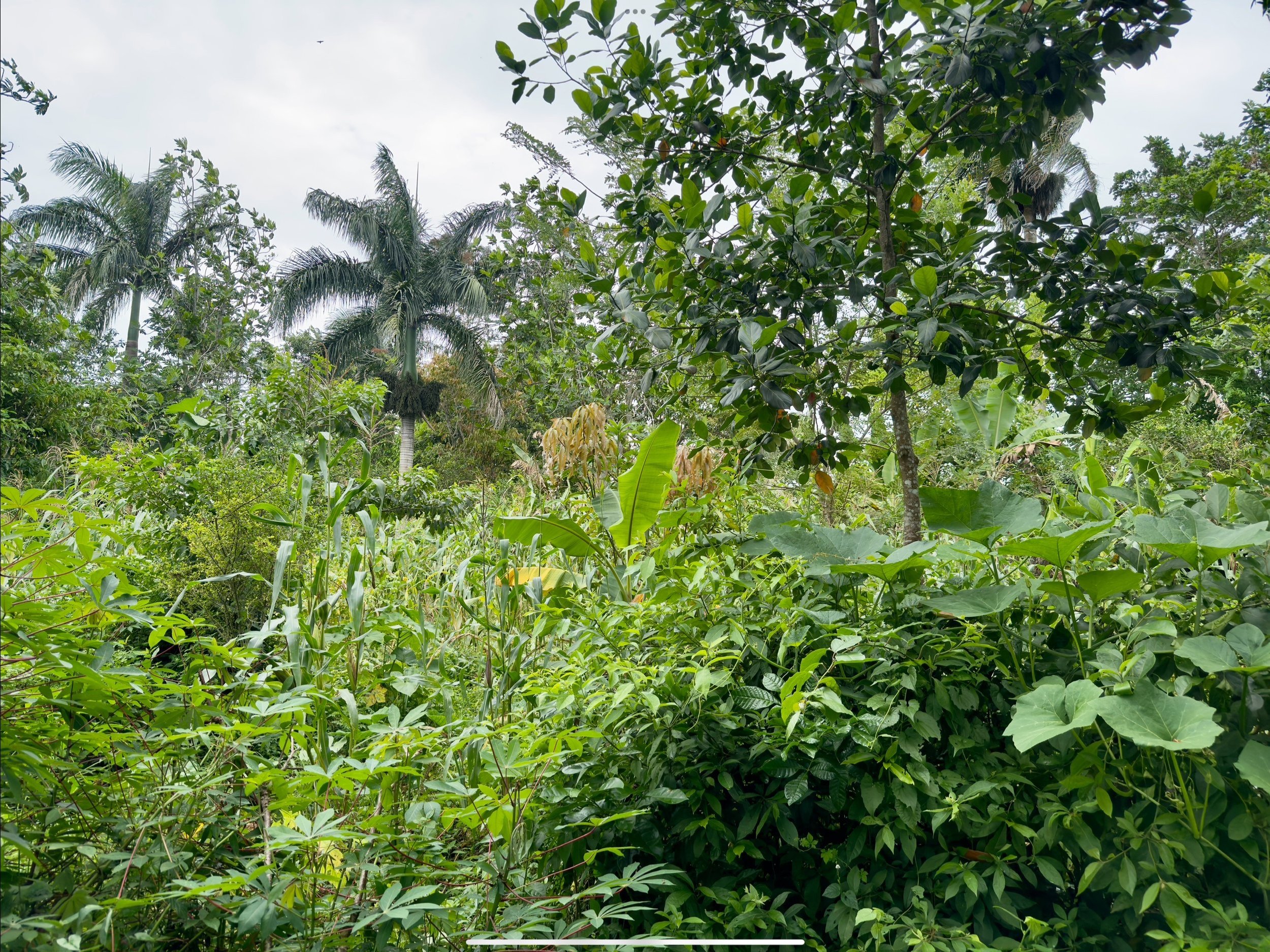
Participation in the program requires a genuine commitment to land stewardship. Farmers agree to adopt two to three regenerative practices on their own land as a condition of support. These practices may include planting trees in syntropic rows, building compost systems, establishing living mulch, or implementing water retention techniques.
This exchange model strengthens long-term ecological stewardship and ensures that restoration occurs within farmer-managed landscapes rather than solely on project sites. It also builds a growing network of land stewards who are actively regenerating their own corner of Haiti.
Our Approach
-

Native & Useful Species
We prioritize trees that serve ecological and community needs, from erosion control to food security.
-

Regenerative Agroforestry
Trees and crops are planted in syntropic rows to mimic natural forest layers and improve soil health over time.
-

Community-Led Restoration
Land stewards guide every step, from seed saving to planting, ensuring solutions are local and lasting.
What Regeneration Looks Like
25,000+ Trees Planted and Distributed
Each tree planted is a living investment in Haiti’s future. These trees don’t just provide fruit. They create shade, restore soil, attract wildlife, and cool the land. From towering breadfruit to fast-growing support species, every sapling is part of a larger living system.
100+ Farmers Supported
We don’t work for communities — we work with them. These farmers are caretakers of their own land, empowered with knowledge and resources to restore it. With our support, they’re growing food, rebuilding ecosystems, and inspiring their neighbors to do the same.
7 Microclimates Restored
Dry, degraded land has become living, breathing ecosystems. Shade has returned, water holds in the soil longer, and native life is beginning to thrive again. These pockets of restoration offer proof that change is possible — one plot at a time.
Countless Seeds Shared
Every seed is a story, a memory, and a promise. By sharing seeds freely — not selling them — we preserve biodiversity, protect traditional varieties, and plant the idea that food sovereignty starts with access.
75+ Workshops and Trainings
Learning happens on the land, not in classrooms. Our workshops bring farmers, youth, and community members together to practice regenerative techniques firsthand. From soil building and tree planting to seed saving and erosion control, every session is grounded in local knowledge and real application.