
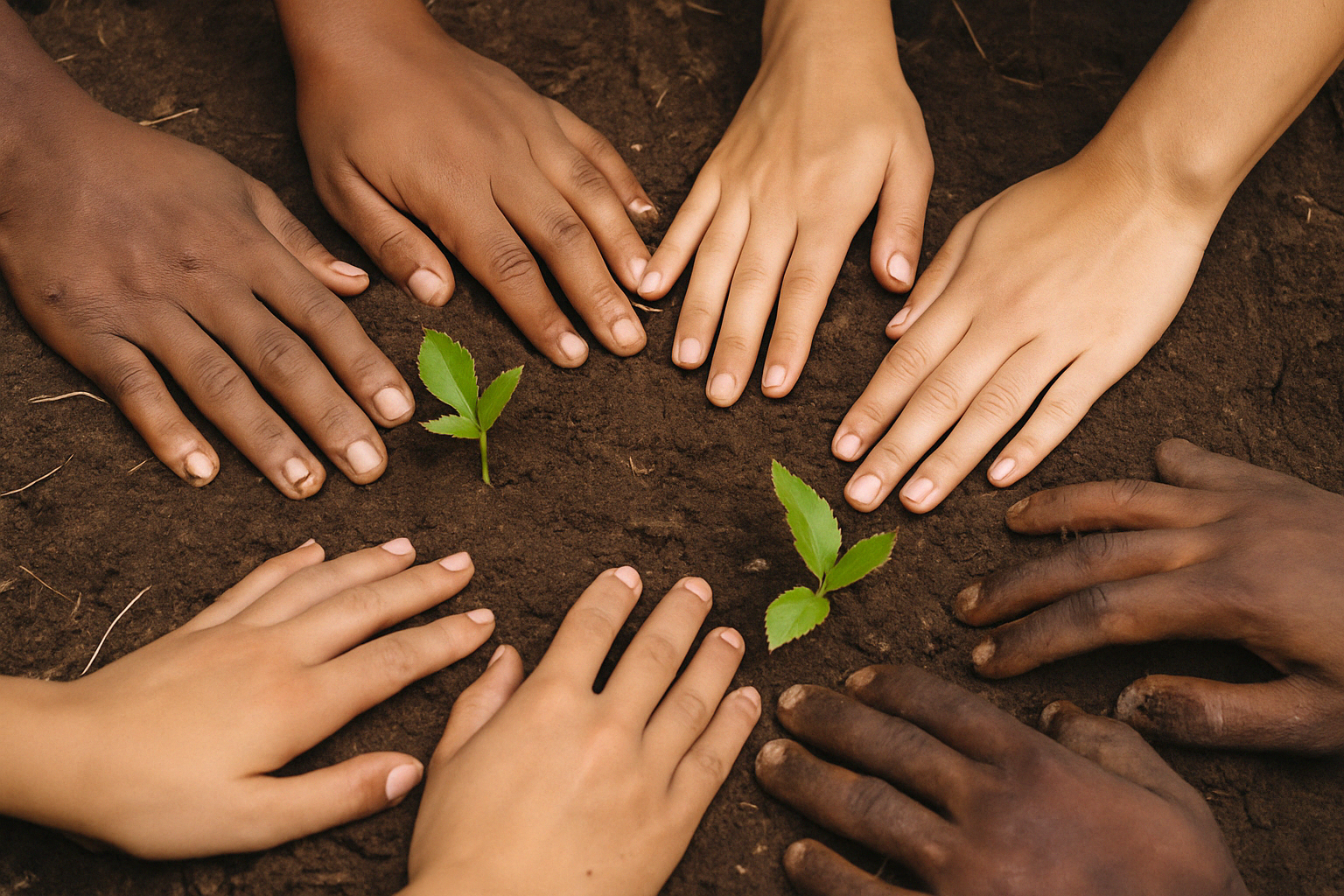
Building Something That Lasts
Grown in Haiti has never been a short-term project. From the beginning, the work has been about building systems that outlast any single person, any single season, or any single grant. That has not changed. What has changed is the scale of what we are building toward.
Where We Come From
Grown in Haiti began in 2014 as a direct response to what Sidney-Max Etienne saw happening to the land around him in Cap Rouge. Erosion was spreading. Seeds were disappearing. Farmers who had worked the same soil for generations were being pushed further from it. The response was simple and immediate. Start planting. Start sharing. Start paying attention.
Over a decade later that response has grown into something more structured without losing what made it real. A nursery producing thousands of saplings annually. Over 25,000 trees planted and distributed. Six regenerative systems across multiple properties at different stages of development. A farmer network spanning the Cap Rouge mountains. Community water infrastructure serving dozens of families. A board of directors. Institutional funders. Global recognition.
We did not plan any of this in advance. It grew from the land and the community, the way everything worth keeping does. The work ahead will grow the same way. But we know more clearly now what we are growing toward.
What We Are Building Toward
-
Food Grown Where It Is Eaten
Haiti's food system has been pulled away from the soil that once sustained it. We are pulling it back. Through expanding our farmer support program, developing farmer-led seed selection and seed breeding initiatives, and deepening our agroforestry work across the region, we are building toward a future where farming families in Cap Rouge grow more of what they need from land they steward and understand. Food security that does not depend on outside systems. Food sovereignty that begins with a seed saved by the hands that planted it.
-
Climate Resilience That Starts in the Soil
Healthy soil holds water. Healthy forests regulate temperature. Healthy watersheds protect communities from the extremes that a changing climate is making more frequent and more severe. Every tree we plant, every swale we build, every hillside we restore is a direct investment in the long-term climate resilience of this landscape and the people who depend on it. We are expanding our water catchment infrastructure, deepening our soil regeneration work, and building systems that get stronger with every passing season.
-
Community Health and Collective Wellbeing
Regeneration is ecological and social at once. Clean water, abundant food, shared knowledge, and land that is cared for collectively are the foundations of community health. We already provide first aid support to about 60 families in our network. Next comes a dedicated community learning center and a water treatment hub bringing clean drinking water to the families we work with. All of it points the same way: communities that are healthier, more self-sufficient, and more closely tied to the land they live on.
-
Long-Term Resilience in the Land Itself
The most important measure of this work is not what we can report this year. It is what the land looks like in twenty years. In fifty. We are building toward regenerative systems that are complex enough to be resilient, diverse enough to adapt, and deep-rooted enough to endure. Farmer-led seed programs that preserve and strengthen native and traditional varieties. Living seed banks that ensure planting material flows freely through the community across generations. Monitored, documented restoration sites that accumulate ecological knowledge over time. Land that thrives.
From Response to Institution
Grown in Haiti started as a response to what was happening to the land. It is becoming something that can build the conditions for what comes next.
That transition happens by deepening the work. We are formalizing what has been learned, building structures strong enough to carry it forward without depending on any one person, and making sure the farmers, families, and communities at the center of this work have genuine ownership of it.
regeneration as a way of life
Behind all of it is one conviction that has guided this work from the beginning. Regeneration is a relationship. With the soil, with the water, with the seeds, with the people who depend on all of it. It is not a set of practices you apply to a piece of land and walk away from.
Everything Grown in Haiti is building toward reflects that conviction. The learning center is a place where that relationship can be taught and passed on. The water hub is an expression of what it means to care for a community across generations. The research network is a way of listening to the land more carefully and sharing what it says more widely.
We are building toward a Haiti where regeneration is not a project someone brings from the outside. It is simply how people live.
Connected to Everything We Do
Our strategic direction is reflected across every program and initiative we are currently developing. From the farmer support program and the experimental regenerative systems network to our expanding monitoring and research capacity, each piece of work is part of the same long-term effort. All of it is pointed in the same direction.
If you want to understand where Grown in Haiti is going: deeper into the land, deeper into the community, and closer to the people who will still be here in fifty years.
Be Part of What We Are Building
The work ahead requires sustained investment, committed partners, and a growing community of people who believe in what is possible when restoration is led from within. If that is you, we would love to hear from you.